
 By Omer Okic, owner of Ultimate Exteriors · 28 years on Des Moines roofs
Updated October 2026
Before a roll-off dumpster arrives, clear the driveway, measure a level spot with overhead clearance, and lay plywood under the wheels to protect the surface.
- Clear vehicles and obstacles the day before
- Leave room for the truck to back in and lift
- Plywood under the rails protects concrete and asphalt
- Keep the area clear of overhead wires and branches
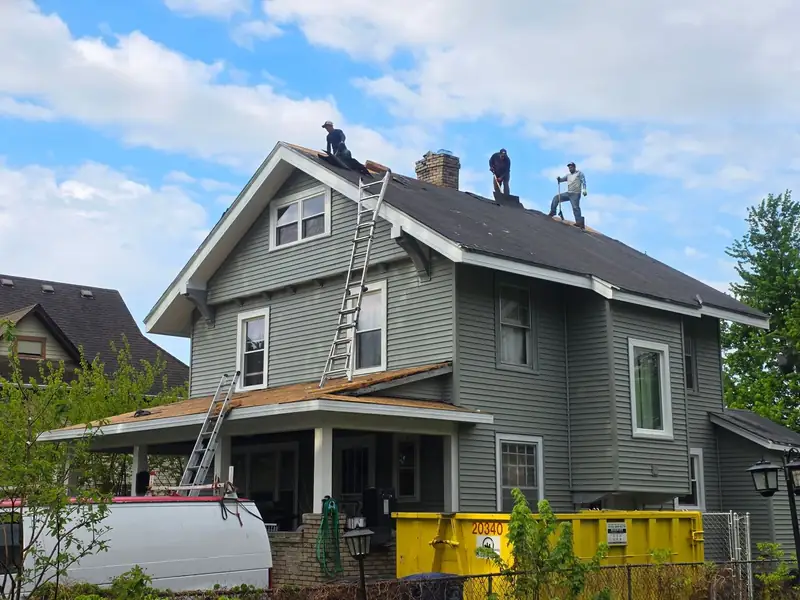
Most roof replacements and big exterior projects start with a roll-off dumpster in the driveway. A little preparation protects your driveway and keeps the project on schedule.
Why driveway prep matters
A loaded roll-off dumpster can weigh more than 10,000 pounds. That weight can crack asphalt, chip concrete and leave dents, and summer heat makes asphalt softer and easier to damage.
Clear and inspect the surface
Move vehicles and anything else out of the delivery path. Photograph any existing cracks so there's a clear record, and note soft spots. Make sure there's enough room: roughly 10 feet of width for placement and 12 to 14 feet for the truck to get in.
Measure the placement zone
Mark where the dumpster will sit and check overhead for branches, power lines and the garage door. Keep the container at least three feet from the house, fences and landscaping.
Protect the driveway
Plywood under the dumpster's rails or feet spreads the weight. On asphalt, foam board under the plywood adds cushion. Rubber mats work for weaker or decorative surfaces. Secure everything so it can't slide when the container is set down.
Final checks the day before
- Open gates and keep pets inside
- Turn off sprinklers
- Confirm the dumpster size and placement with the provider at least 24 hours ahead
- Give neighbors a heads-up if the street may be partly blocked
When you hire Ultimate Exteriors, we coordinate the dumpster, protect your property and haul everything away when the job is done.