
 By Omer Okic, owner of Ultimate Exteriors · 28 years on Des Moines roofs
Updated October 2026
Ice dams form when heat escaping through the roof melts snow that refreezes at the cold eaves. Better attic ventilation, ice and water barrier and clear gutters prevent most of them.
- Caused by warm attics and cold eaves
- Ice and water barrier protects the roof edge
- Clear, well-pitched gutters let meltwater drain
- Recurring ice dams mean a ventilation problem
An ice dam is a ridge of ice that forms along the edge of your roof and traps melting snow behind it. That water can back up under the shingles and into your walls and ceilings.
What causes them
Warm air from the house heats the roof deck, snow melts higher up, and the water refreezes when it reaches the cold eaves. Poor attic insulation and ventilation are usually the root cause. Clogged gutters make it worse by holding ice at the roof edge.
How a new roof helps
- Ice and water barrier along the eaves and valleys keeps backed-up water out
- Balanced intake and exhaust ventilation keeps the roof deck cold
- Properly installed drip edge lets water reach the gutters
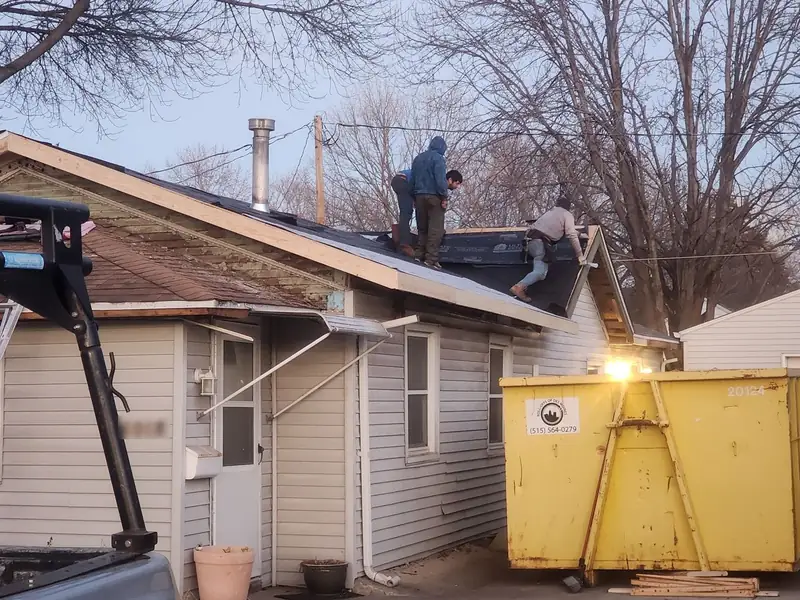
Where gutters fit in
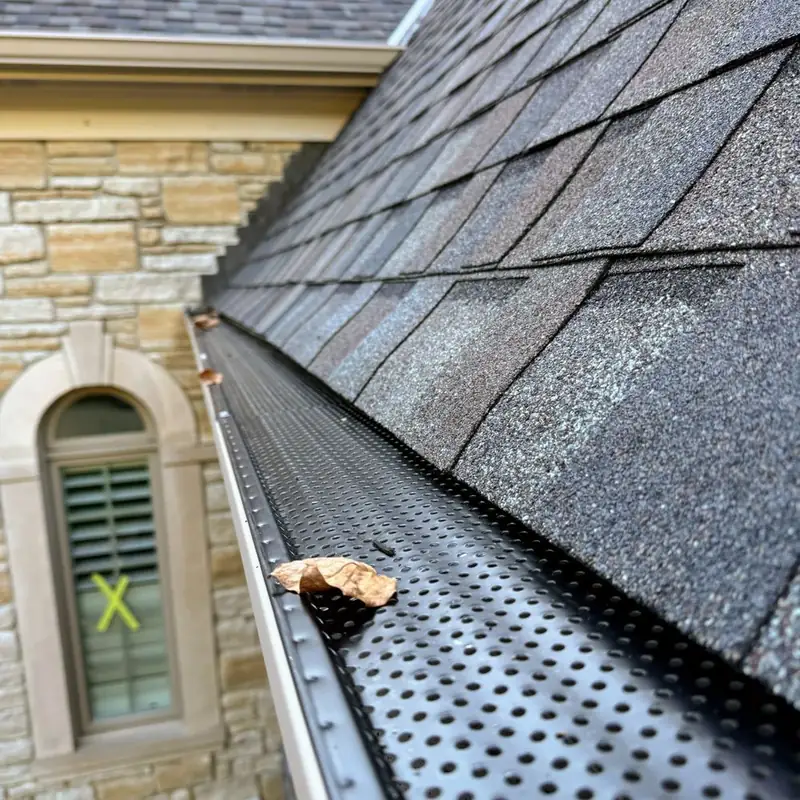
Gutters that are clean, properly pitched and securely hung let meltwater drain instead of freezing in place. Gutter guards can help keep them clear through the fall. If ice dams form on your home every winter, we can inspect your roof, ventilation and gutters together and tell you what's causing it.
Planning a roof replacement to fix ice dam problems for good? See what a new roof costs in Des Moines, including ventilation and ice and water barrier.